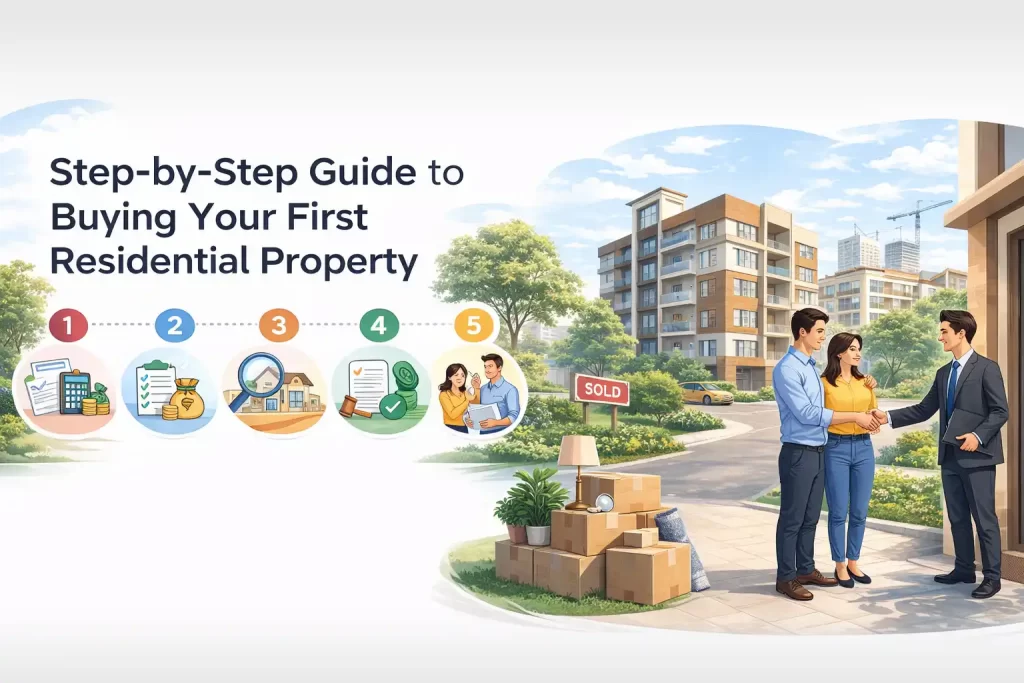
Buying your first residential property is a major life milestone. It represents financial growth, personal stability, and the beginning of a long-term investment journey. However, the process can feel overwhelming without proper guidance. From budgeting and home loans to legal checks and final handover, every step requires careful planning.
This step-by-step guide will help you navigate the journey with clarity and confidence.
Before you begin property hunting, evaluate your financial situation honestly. Buying a home involves more than just paying the property price.
Calculate:
Your total savings
Monthly income and expenses
Existing loan obligations
Emergency funds
Financial experts recommend that your home loan EMI should not exceed 40–50% of your monthly income. Having clarity on your budget helps narrow down realistic property options and prevents financial stress later.
Apart from the base property cost, consider:
Stamp duty and registration charges
GST (if applicable)
Legal and documentation fees
Interior and furnishing expenses
Maintenance charges
Proper budgeting ensures you are fully prepared for the entire investment.
Once you know your budget, clearly define your property requirements.
Ask yourself:
How many bedrooms do you need?
Do you prefer an apartment or an independent house?
Do you need parking space?
Is proximity to schools or offices important?
Are amenities like lift, security, and power backup essential?
Understanding your lifestyle needs helps you filter properties efficiently and saves time during the search process.
Location significantly influences your daily convenience and long-term investment value.
Check access to:
Public transport and metro stations
Major roads and highways
Workplace and business hubs
A well-connected neighborhood improves quality of life and increases resale value.
Look for nearby hospitals, schools, grocery stores, parks, and banks. A developed area ensures comfort and convenience for your family.
If you are investing for the long term, research upcoming infrastructure projects that may increase property value in the future.
The credibility of the developer is crucial when purchasing your first property.
Look into:
Past completed projects
Delivery timelines
Customer reviews
Construction quality
A reliable developer ensures transparency, timely completion, and proper legal documentation.
Seeing an actual project gives you a realistic understanding of construction quality, layout efficiency, and finishing standards.
Legal due diligence is one of the most important steps in the buying process.
Ensure the property has:
Clear land title
Approved building plans
RERA registration (if applicable)
Completion or occupancy certificate
Carefully review the sale agreement and understand all terms and conditions before signing. Consulting a legal expert is advisable, especially for first-time buyers.
Skipping legal verification can lead to future disputes or financial losses.
If you plan to take a home loan, start the approval process early.
Research interest rates from multiple banks and financial institutions. Compare:
Interest rates (fixed vs. floating)
Loan tenure
Processing fees
Prepayment charges
Getting pre-approved for a loan strengthens your negotiation power with developers and ensures smoother financial planning.
Your credit score plays a major role in loan approval and interest rates. Ensure your financial records are clean and updated before applying.
Never rely solely on brochures or digital presentations. Always conduct physical site visits.
During the visit, observe:
Construction quality
Ventilation and natural lighting
Layout efficiency
Quality of fittings and fixtures
Surrounding environment
Visit the property at different times of the day to assess traffic, noise levels, and neighborhood activity.
If buying an under-construction property, review the construction progress and timeline commitments.
Once satisfied, proceed with booking the property.
Developers usually offer structured payment plans linked to construction stages. Review:
Booking amount
Installment schedule
Possession timeline
Ensure all payment terms are clearly mentioned in writing.
Complete the property registration process at the sub-registrar office. Pay applicable stamp duty and registration charges to legally transfer ownership.
This step officially makes you the legal owner of the property.
Before taking possession, conduct a final inspection.
Check for:
Wall finishing and paint quality
Plumbing and drainage
Electrical fittings and switches
Doors and windows alignment
Any pending repair work
Ensure the developer provides:
Possession letter
Completion certificate
Warranty documents (if applicable)
Raise concerns immediately before accepting final handover.
After possession, you can begin planning interiors, furniture, and utilities setup.
Arrange for:
Electricity and water connection transfers
Gas connection
Internet services
Home insurance (optional but recommended)
Now you are ready to move into your new home and begin a new chapter.
Buying your first residential property is a structured process that requires financial planning, research, and careful decision-making. By following this step-by-step approach—assessing your budget, selecting the right location, verifying legal documentation, and conducting proper inspections—you can reduce risks and make a confident investment.
Remember, patience and due diligence are your strongest tools in this journey. With the right preparation, your first home will not just be a property purchase—it will be a foundation for your future security, comfort, and growth.