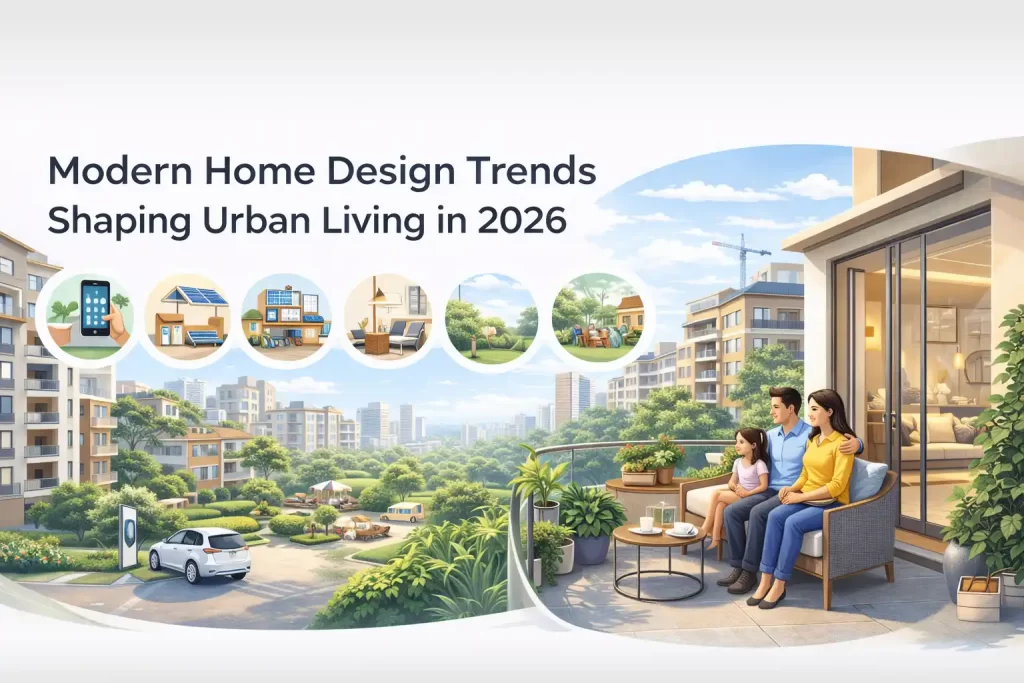
Urban living is evolving rapidly. As cities expand and lifestyles shift, homeowners are looking for spaces that combine comfort, technology, sustainability, and smart functionality. In 2026, modern home design is no longer just about aesthetics — it’s about creating intelligent, adaptable, and future-ready living environments.
Let’s explore the key home design trends shaping urban living in 2026.
Technology continues to redefine how we live. In 2026, smart homes are not a luxury — they are becoming a necessity in urban developments.
From smart lighting and voice-controlled appliances to AI-powered climate systems, automation is seamlessly integrated into everyday life. Homeowners can manage security cameras, door locks, lighting, and even curtains through their smartphones.
Advanced systems now track energy usage in real-time, helping residents reduce electricity bills and carbon footprints.
Biometric entry, video doorbells, and remote surveillance systems offer enhanced safety — a top priority in urban environments.
Urban buyers are increasingly choosing projects that offer built-in smart infrastructure rather than retrofitting later.
Sustainability is at the core of modern urban home design in 2026.
Developers are using recycled steel, sustainable wood, low-VOC paints, and eco-friendly insulation materials to reduce environmental impact.
Rooftop solar panels, solar water heaters, and energy-efficient windows are becoming common features in residential projects.
Rainwater harvesting systems and low-flow plumbing fixtures are being incorporated into modern housing layouts.
Buyers are no longer asking whether a project is eco-friendly — they expect it to be.
With hybrid work culture continuing in 2026, urban homes are being designed to serve multiple purposes.
Dedicated workspace corners with proper lighting, acoustic insulation, and built-in desks are now standard in modern apartments.
Sliding partitions, foldable furniture, and convertible rooms allow spaces to adapt based on daily needs.
Urban homes focus on smart storage solutions — hidden cabinets, wall-mounted units, and under-bed storage maximize usable area.
Space efficiency is becoming more important than sheer square footage.
The modern urban homeowner prefers simplicity with sophistication.
Soft whites, beige, warm greys, and earthy tones dominate interiors in 2026.
Minimal furniture, concealed wiring, and sleek modular kitchens define contemporary homes.
Wood, stone, and textured fabrics add warmth while maintaining a clean, modern look.
The goal is to create calming environments that provide relief from the fast-paced city life.
Urban residents crave a connection with nature — even in high-rise apartments.
Developers are designing spacious balconies that function as mini-gardens or relaxation zones.
Indoor plants, vertical gardens, and natural lighting are integrated into interior layouts.
Large windows allow more natural light and better ventilation, improving overall well-being.
This blending of indoor and outdoor elements enhances mental health and overall lifestyle quality.
Modern urban living is shifting from isolated apartments to community-focused developments.
Clubhouses, co-working spaces, fitness centers, rooftop lounges, and landscaped gardens are standard features in premium projects.
Designated areas for community gatherings, children’s play zones, and senior citizen spaces foster interaction among residents.
Urban homeowners prefer secure gated communities with controlled access and 24/7 surveillance.
The emphasis is not just on building homes — but creating complete living ecosystems.
Health and wellness remain major priorities in 2026 home design.
Air purification systems and cross-ventilation designs ensure healthier indoor environments.
Homes are being designed to maximize daylight exposure, reducing dependence on artificial lighting.
Soundproof windows and better acoustic planning help reduce city noise pollution.
Urban homes are now designed to support physical and mental well-being.
Modern kitchens and bathrooms are becoming smarter and more efficient.
Touchless faucets, energy-efficient appliances, and smart refrigerators are trending in 2026.
Floating vanities, concealed storage, and sleek fittings maximize space while maintaining luxury appeal.
Sensor-based lighting and low-consumption fixtures contribute to sustainability goals.
Functionality and elegance go hand in hand in these essential spaces.
Today’s buyers want homes that reflect their personalities.
Developers are offering multiple design themes — contemporary, industrial, Scandinavian, or luxury finishes.
Buyers can request minor modifications in layouts before possession.
Optional automation upgrades allow homeowners to scale technology as per their budget.
Personalization is becoming a key selling factor in urban real estate.
Urban homes in 2026 are designed keeping future expansion and technological evolution in mind.
Electric vehicle charging stations are being integrated into residential parking areas.
Fiber-optic connectivity and strong Wi-Fi infrastructure are non-negotiable features.
Earthquake-resistant structures and fire safety systems are built to meet advanced safety standards.
Buyers are thinking long-term, and developers are responding accordingly.
Modern home design in 2026 is about intelligent planning, sustainability, community living, and adaptability. Urban homes are no longer just physical structures — they are smart ecosystems designed to enhance lifestyle, safety, and well-being.
For homebuyers, understanding these evolving trends is crucial before making an investment decision. Whether you are purchasing your first apartment or upgrading to a premium project, choosing a development that embraces modern design trends ensures better long-term value, comfort, and convenience.
Urban living is transforming — and modern homes are leading that transformation.